Kiran Admache · March 2026 · Seoni, MP
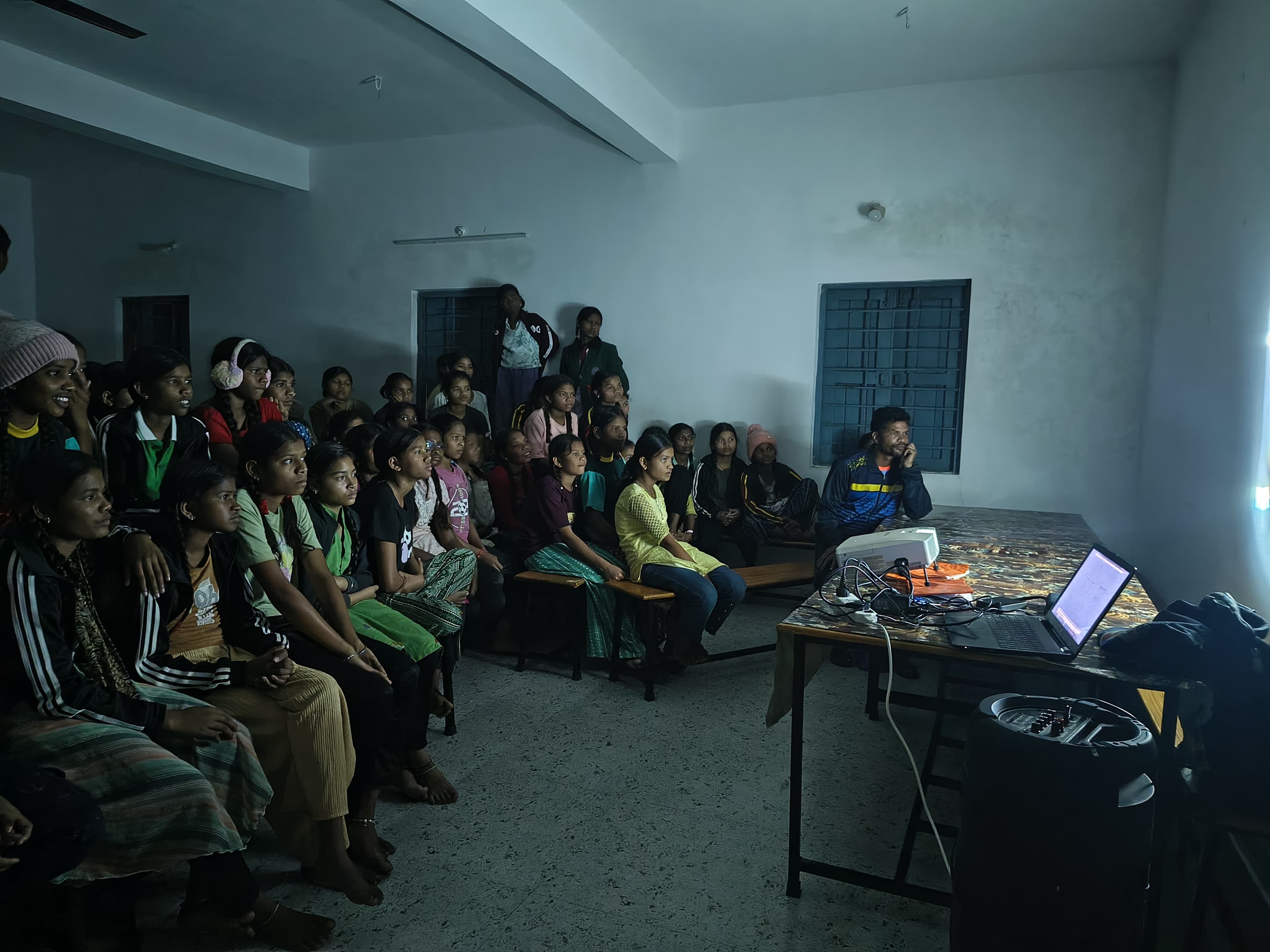
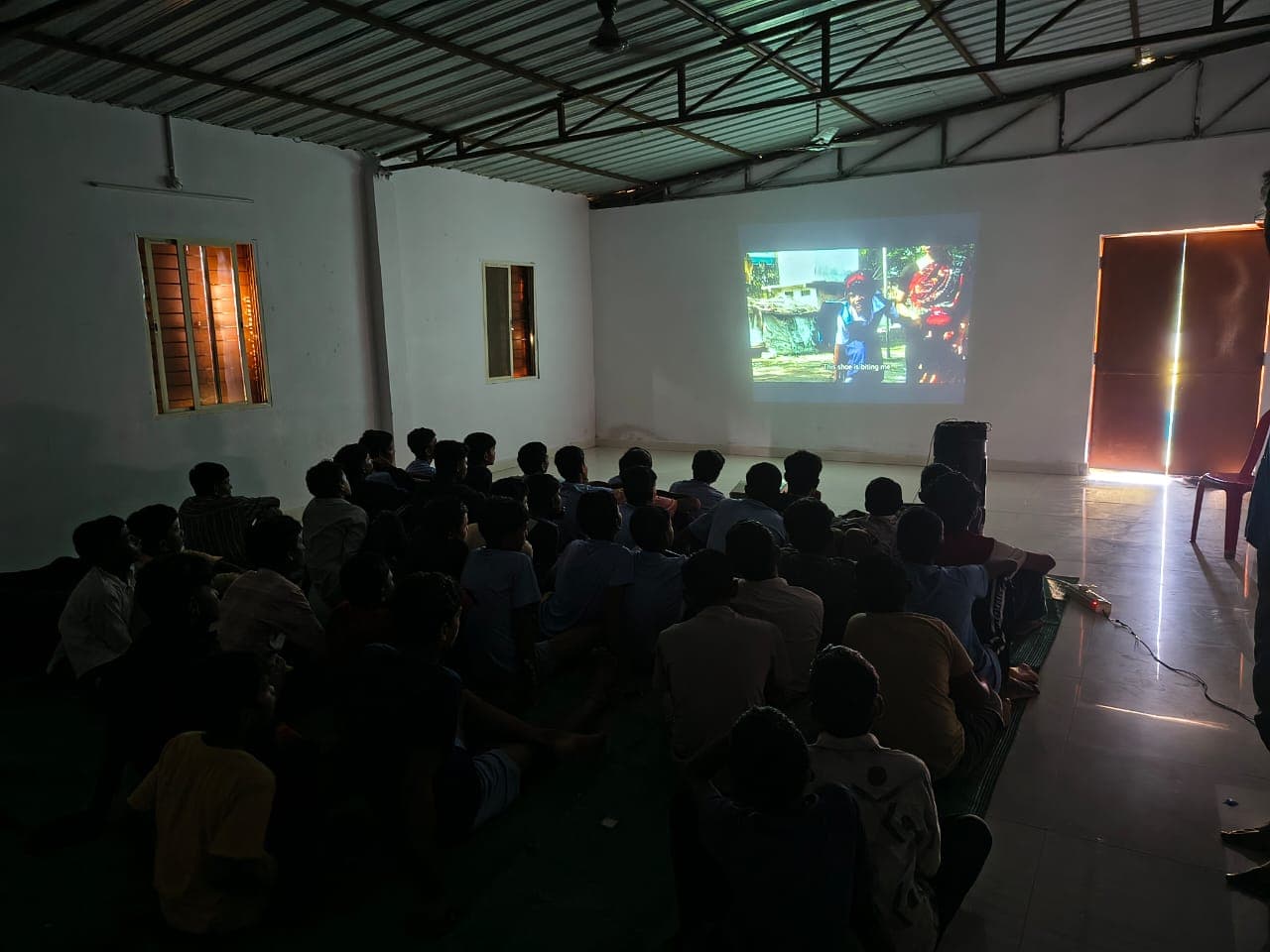
A night-time community screening projected between sal trees in Seoni
The hostel courtyard was cold by the time we unrolled the screen. Two sal trees, forty feet apart, held it up with bailing twine. A bulb hung from a third tree, angled away so the projector had the dark it needed. Nothing about the setup was polished — the projector was balanced on a stack of textbooks, the audio came out of a PA the kitchen usually used for morning prayers — but the moment we switched off the courtyard light, none of that mattered.
Forty students filed in quietly. Boys in their hostel shirts, girls from the adjoining block who'd walked across together. Most of them were between twelve and sixteen, the age where every social signal matters and every film gets reviewed in whispers before the opening credits end. They sat cross-legged on durries laid out across the concrete. A few asked us if we had popcorn. A few were already bored by the time we pressed play.
Then Kohinoor began. And within four minutes there was the kind of silence you only get in a forest after sundown. No shuffling, no whispering, no phones — which was unusual because the hostel supervisor had, for once, not confiscated anyone's phone. The silence held for all forty-five minutes. There was one moment, when a Baiga woman on screen started singing a harvest song, that a girl in the second row started crying without realising it. Her neighbour noticed, and then quietly cried too. Neither of them wiped their eyes. They just kept watching.
“They weren't watching a film. They were watching themselves — for the first time.”
When the credits rolled, nobody clapped. There was a long pause, the kind of pause we'd been warned to expect by every community-filmmaker we respect, and then — a boy in the back said: “Sir, can we ask questions?” That was the last simple sentence of the evening. The questions didn't stop for two hours. Not about craft, not about cameras, not about which city we'd come from. About their aunts. About their grandmothers. About the song. About whether that woman on screen was alive today. About whether they could make a film like that.
We did not answer every question well. Some of them we had no business answering. But we wrote down every single one, because at some point halfway through, it became clear that the forty students in that courtyard were not the audience of the film — they were the next chapter of it. And the only reason we had set up a screen between two sal trees in a hostel courtyard in the first place was to find out exactly that. This, on paper, is what CICADA does. This, in practice, is why it exists.
Kiran Admache
Co-Founder, CICADA Foundation
Green Hub Fellowship alumnus, wildlife and community filmmaker. Based in Seoni, Madhya Pradesh.
Keep Reading